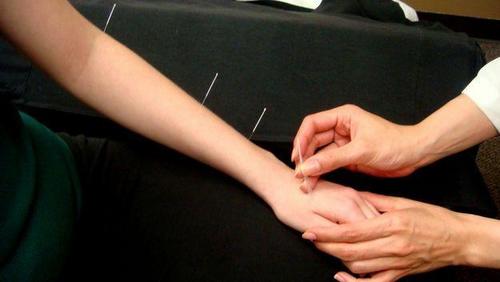
It says… something… about modern medicine that,
(1) the default treatment for cancer patients is poisoning them, and
(2) the most promising hypothesis that an actual researcher could locate for dulling the pain of being poisoned was stabbing people, and
(3) stabbing people totally works,
(4) except, it works 2x *better* when you do sham acupuncture… where you don’t stab them (and instead use fake needles that retract) on pressure points that totally shouldn’t work according to the theory of acupuncture,
(5) [SO IN MY FANTASY WORLD] the researchers concluded that since their sham group performed better than their experimental treatment group, acupuncture must be a pretty terrible therapy that no one should use. In fact, the researchers realized that maybe their study just proves that people in severe pain due to intentional poisoning get better at dealing with pain after 8 weeks, no matter what you do to them. But mostly, they get *more* better when you *don’t* stab them.
(6) (BUT BACK IN THE REAL WORLD) hahaha… nah… j/k. These researchers instead conclude their peer-reviewed study by saying that real and sham acupuncture both worked with p < .05. So they are both great! So you should get real acupuncture… even though sham acupuncture works better. Whatever. People who are being intentionally poisoned should also be intentionally stabbed too. QED.
#sham_science #lets_go_back_to_leeches
See on www.thirdage.com

14 Responses to “Acupuncture, Real or Sham, Eases Chemo Hot Flashes”
January 1
Doug DoumaI think the ultimate goal in life is to avoid being stabbed.
January 1
Eliezer YudkowskyIt’s homeopathic acupuncture.
January 1
Will SawinNot having a control group is not one of the things I would have expected scientists to screw up.
January 1
Andrasek GyörgyPlacebo is *the* most well-tested painkiller we have, and also the one that has no side effects and no overdose. First one didn’t work? Take three more!
January 1
Daniel PowellPlacebo has the side effects that the patient expects it to have.
January 1
TaurusSo why didn’t they just recommend the sham procedure instead? Or better yet, Reiki?
A worthwhile read
http://www.sciencebasedmedicine.org/acupuncture-doesnt-work/
January 1
Brian BughPlacebo works even if you tell people it’s a placebo. http://www.theguardian.com/science/2010/dec/22/placebo-effect-patients-sham-drug
January 1
Eliezer YudkowskyWe need to study the effects of being in a study compared to not being in a study.
January 1
Daniel PowellTell half of the patients at one hospital that they are the control group for a study on the effects of placebo, and compare their outcomes to the other half?
January 1
Malcolm McCullochHmm. I wonder how results might differ depending on whether or not the real control group even thinks there’s a study going on that they’re not part of. Methinks maybe we need two control groups.
January 1
Daniel PowellWell, if the intervention is telling some people that there’s a study going on and that they are the non-intervention group, I guess that we can’t tell the real non-intervention group that there’s a study going on…
January 1
Malcolm McCullochExactly. But like, one group doesn’t even think they’re part of the study, but still knows that one is happening. Like they think their relevant vitals aren’t being measured.
January 1
Daniel PowellTell one-third of the patients that there is a study going on, but they aren’t part of it, one-third that they are the non-intervention group, and don’t tell the rest anything?
January 1
William KwanStudyception